
Our Chicago Cosmetic Dentist Can Digitally Create Your Crowns
A damaged tooth doesn’t have to define your smile. At our Chicago cosmetic dental practice, Dr. Bianca Clark specializes in custom dental crowns built with the kind of precision and artistry that makes a restoration virtually indistinguishable from your natural tooth. Whether you’re dealing with a fractured molar, severe decay, or a tooth that survived a root canal but needs protection, we create porcelain and ceramic crowns designed to look, feel, and function exactly like the real thing—often in a single appointment.
Our Chicago cosmetic dentist serves patients throughout Chicago and surrounding communities, including River North, Lincoln Park, West Town, Little Italy, Evanston, Oak Park, and Skokie. Ready to restore your smile? Call our dental office in Chicago at (312) 212-3304 to schedule your consultation with Dr. Clark.

What Is a Dental Crown, and Do You Need One?
Think of a dental crown as a custom-fitted helmet for your tooth. It’s a tooth-shaped cap that completely covers the visible portion of a damaged, weakened, or aesthetically compromised tooth—restoring its shape, size, strength, and appearance all at once.
Crowns are one of the most versatile restorations in dentistry. Unlike a filling that patches part of a tooth, a crown protects the entire tooth structure above the gumline, which is why dentists reach for them in cases where a filling simply isn’t enough.
You may be a good candidate for a dental crown if you have:
- A tooth with extensive decay that’s too large to be filled
- A cracked or fractured tooth that’s at risk of splitting further
- A tooth that’s been treated with a root canal and needs protection
- A severely worn-down tooth from grinding (bruxism)
- A discolored or misshapen tooth that doesn’t respond to teeth whitening or bonding
- A dental implant that needs a crown placed on top
- An existing crown that’s failing, chipping, or aging out
Not sure if a crown is the right call? Dr. Clark always takes a conservative, biomimetic approach—meaning she’ll explore whether a more minimally invasive option like an inlay, onlay, or veneer could achieve the same result before recommending a full crown. Your long-term oral health guides every decision.
Types of Dental Crowns We Offer in Chicago
Not all crowns are created equal. The material you choose affects everything from aesthetics to durability to how the crown interacts with the rest of your bite. Dr. Clark offers the full range of modern crown materials and will help you choose the best fit for your tooth’s location, your lifestyle, and your goals.
All-porcelain crowns are the ideal choice for front teeth and any highly visible area of your smile. They replicate the natural translucency of tooth enamel with remarkable accuracy—the kind of subtle light reflection that makes a crown look like an actual tooth, not a cap. These are completely metal-free and highly biocompatible, making them an excellent choice for patients who are sensitive to metals or prioritize a natural, aesthetic result.
- Best for: Front teeth, visible upper teeth, and patients with metal sensitivities.
- Lifespan: 10–15 years with proper care
All-ceramic crowns (such as e.max, made from lithium disilicate) offer an excellent blend of strength and beauty. They’re slightly more fracture-resistant than traditional porcelain while still achieving the natural translucency that makes for a seamless aesthetic result. Dr. Clark often recommends e.max ceramic for patients who need a durable crown in a visible area and want the most natural-looking outcome possible.
- Best for: Front and premolar teeth where both aesthetics and moderate strength are priorities.
- Lifespan: 10–15 years
CEREC (Chairside Economical Restoration of Esthetic Ceramics) is the technology that makes same-day crowns possible. Using our in-office CAD/CAM system, Dr. Clark can digitally design, mill, and place a custom ceramic crown in a single appointment—no messy impressions, no temporary crown, and no second visit. The result is a precision-fit restoration made from a solid block of high-quality ceramic, placed the same day you walk in.
- Best for: Patients with busy schedules, those who want to avoid temporary crowns, and urgent restorations.
- Lifespan: Comparable to traditional lab-fabricated crowns — 10–15+ years
What Makes Dr. Clark’s Approach Different
Plenty of dental offices can place a crown. What distinguishes Dr. Clark’s practice is the combination of advanced digital technology, biomimetic philosophy, and a commitment to creating restorations that work with your oral ecosystem rather than simply covering a problem.
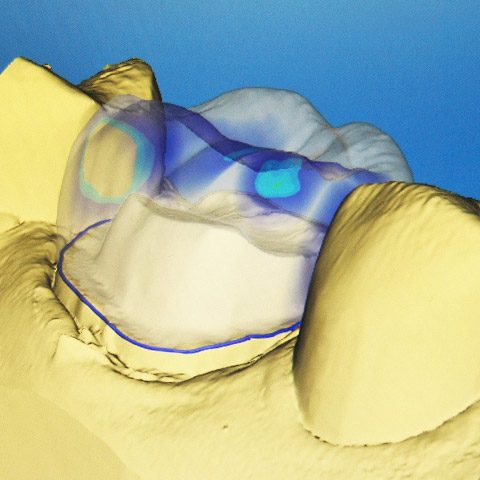
- Digital Smile Preview Before You Commit: Using EXOCAD digital design software and intraoral scanning, Dr. Clark maps your tooth structure in 3D and designs your crown on-screen before anything is prepared on your tooth. You see your result before treatment begins. You can review the shape, size, and proportions—and request adjustments. There are no surprises.
- In-House 3D Printing and Milling Lab: Dr. Clark’s practice houses an on-site milling machine and 3D printing lab, which means your crown is fabricated right here in Chicago—not sent to an outside dental lab. This allows for faster turnaround, tighter quality control, and the ability to make same-day adjustments if needed.
- Biomimetic Dentistry: Preserving What’s Yours: Biomimetic dentistry is centered on one principle: preserve as much of your natural tooth structure as possible. Rather than aggressively removing enamel, Dr. Clark uses advanced bonding techniques and precisely designed crowns that require minimal tooth reduction. Less removal means a stronger tooth long-term, less post-treatment sensitivity, and dental work that’s built to last.
- Eco-Friendly, Biocompatible Materials: Every crown placed in our office uses plant-based and biocompatible materials that are free from harmful chemicals. This isn’t just better for the environment—it’s better for your oral ecosystem and your long-term health.
- Laser Precision for Optimal Crown Placement: Dr. Clark uses laser technology for gum recontouring when needed, ensuring each crown sits at exactly the right gumline position for both health and aesthetics. Proper gum placement also reduces the risk of bacterial buildup at the crown margin over time.
The Dental Crown Procedure at Our Chicago Dental Office
Understanding what actually happens during your crown appointment takes away the guesswork and the anxiety. Here’s exactly what to expect at our Chicago office.
Are you not sure if you need a dental crown? Worry not! Your journey starts with a comprehensive evaluation. Dr. Clark examines the tooth, takes X-rays, and uses our intraoral scanner to capture a precise 3D image of your tooth and surrounding bite. No goopy impressions, no gagging. This scan becomes the digital blueprint for your crown.
Using EXOCAD software, Dr. Clark designs your crown on-screen while you’re in the chair. You can see the proposed shape and proportions in real time. If you want adjustments—more natural contours, a slightly different shade—we make them digitally before a single tool touches your tooth.
Dr. Clark gently removes the minimal amount of tooth structure necessary to accommodate the crown. In keeping with her biomimetic approach, this preparation is as conservative as the case allows. If you’re having a same-day CEREC crown, the preparation happens immediately before milling. A premium temporary crown is positioned in multi-step cases to safeguard your tooth while your permanent crown is completed.
For same-day CEREC crowns, the digital design is sent directly to our in-office milling unit, which carves your crown from a block of high-strength ceramic in approximately 15–20 minutes. For cases requiring a lab crown (such as full-contour zirconia or special aesthetic requirements), the design is sent to our trusted local dental lab.
Before cementing your permanent crown, Dr. Clark performs a wet try-in — placing the crown without cement first so you can evaluate the fit, the bite, and the aesthetics. Photos are taken. Adjustments are made if needed. Only when you’re fully satisfied does the crown get permanently placed.
After placement, Dr. Clark monitors your crown at your regular cleanings to assess tissue health, check the bite, and ensure long-term performance.
How Much Do Dental Crowns Cost in Chicago?
The price of dental crowns is a common question patients ask before their appointment, and you deserve a clear answer.
In Chicago, dental crowns typically range from $1,000 to $2,500 per tooth, depending on the material, the complexity of the case, and the technology involved. The estimated cost of dental crowns in Chicago, without insurance, varies depending on the type.
- All-porcelain crowns typically range from $1,000 to $2,500.
- Zirconia crowns also fall within the same price range, from $1,000 to $2,500.
- All-ceramic crowns, such as those made with e.max, are similarly priced at $1,000 to $2,500.
- If you need a same-day solution, CEREC crowns generally cost between $1,200 and $1,900.
- Porcelain-fused-to-metal crowns are estimated to cost between $1,000 and $2,000.
Does Dental Insurance Cover Crowns?
Most PPO dental insurance plans classify crowns as a major restorative procedure and cover approximately 50% of the cost after your deductible is met, subject to your annual maximum (typically $1,000–$1,500 per year). Coverage is more likely when the crown is medically necessary—for example, after a root canal or to protect a fractured tooth—versus a purely cosmetic application.
We recommend requesting a pre-authorization from your insurance provider before treatment, so you know your exact out-of-pocket responsibility before anything begins. Our front desk team is experienced at helping patients navigate insurance and will verify your benefits as part of your consultation.
Financing Options
For patients without insurance or with out-of-pocket costs remaining after coverage, we offer flexible financing options to help spread payments over time. Ask our team about CareCredit and other available payment plans during your consultation.
The real cost of waiting: A cracked or severely decayed tooth that needs a crown today could need a root canal—or extraction—if left untreated. The cost of delaying treatment is almost always higher than the cost of addressing it now. A quality crown placed today is an investment in avoiding a far more expensive procedure tomorrow.

How Long Do Dental Crowns Last?
With proper care, most crowns last between 10 and 25 years—and in some cases longer. Lifespan depends primarily on the material and how well the crown is maintained.
- Zirconia crowns: 15–25+ years
- All-porcelain / e.max crowns: 10–15 years
- Gold crowns: 20–30 years (the longest-lasting, though rarely chosen for aesthetic reasons)
- Porcelain-fused-to-metal crowns: 10–20 years
The single biggest factor in crown longevity isn’t the material—it’s oral hygiene. Crowns can fail prematurely if bacteria accumulate at the gumline, leading to decay underneath the crown. To protect your investment, the most important things you can do are regular brushing, daily flossing (especially around the crown margin), and keeping up with your six-month cleanings.
Other factors that affect crown lifespan:
- Teeth grinding (bruxism): If you grind at night, Dr. Clark may recommend a custom night guard to protect your crown from excessive wear
- Diet: Avoid chewing very hard foods (ice, hard candies) with your crowned tooth
- Crown material: Zirconia and gold are the most fracture-resistant materials; all-porcelain can chip under extreme force